
Top 5 Office Locations Foreign Companies Are Choosing in Ho Chi Minh City
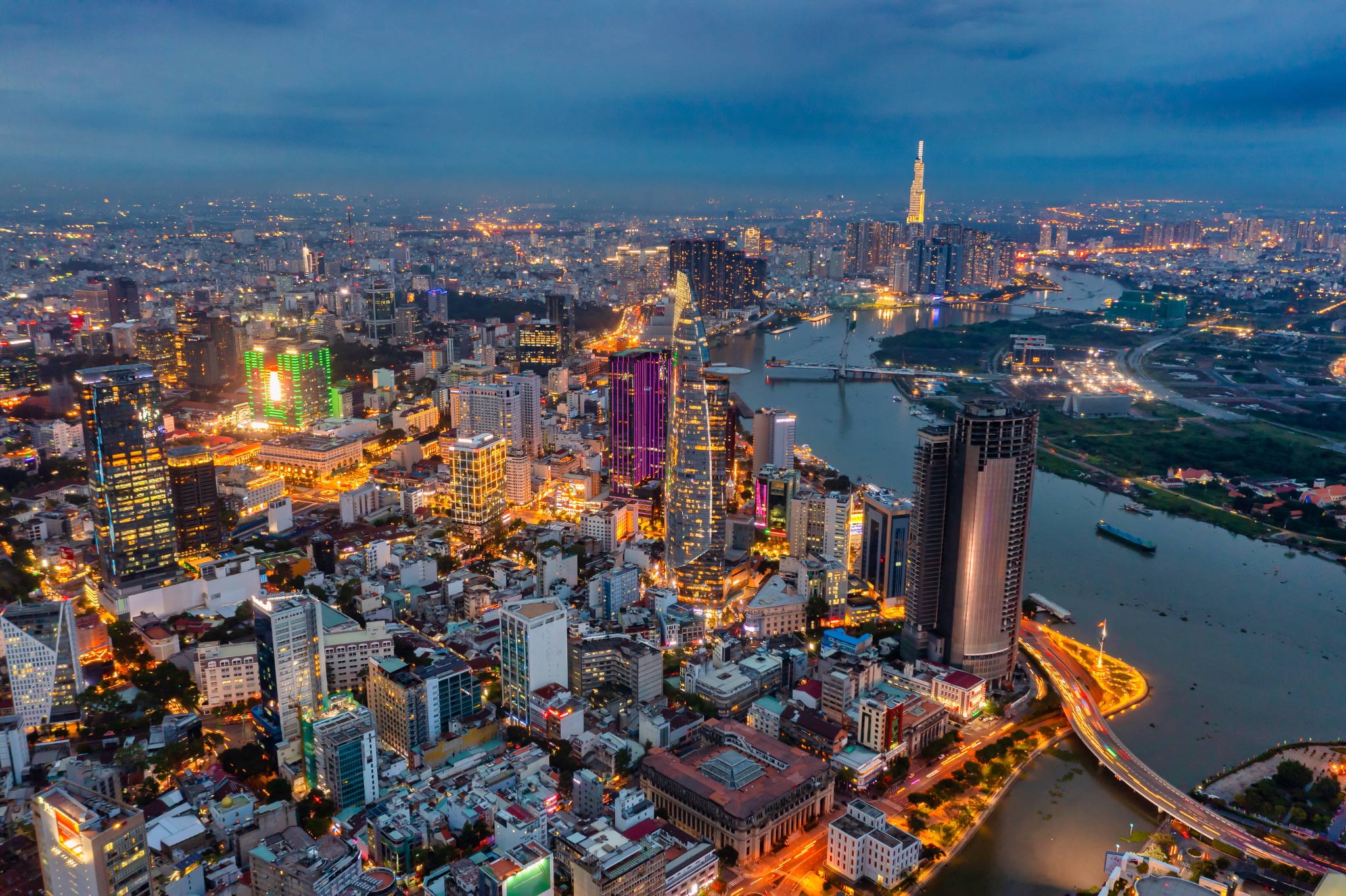
Choosing where to establish an office is one of the first real estate decisions a foreign company makes when entering Ho Chi Minh City. The right location can influence everything from client access and recruitment to operating costs and long-term expansion.
HCMC is a large and increasingly decentralised business market. While District 1 remains the city's traditional commercial core, new business districts and specialised ecosystems are changing where companies choose to locate.
For international businesses entering or expanding in Vietnam, the question is no longer simply where is the best office? It is which location best fits the company's business model, workforce, clients, and growth plans?
Why Foreign Companies Are Choosing Ho Chi Minh City
The numbers continue to point to Ho Chi Minh City as Vietnam's leading destination for foreign investment.
By the end of 2025, the city had attracted approximately US$142.2 billion in cumulative foreign direct investment across more than 20,470 active projects, maintaining its position as the country's leading FDI destination.
The composition of investment is also evolving. Technology, financial services, and other higher-value sectors are becoming increasingly important, reflecting a broader shift away from purely labour-intensive operations.
Several factors continue to support HCMC's appeal to international businesses:
- Its strategic position within Southeast Asia
- A large and increasingly skilled workforce
- A growing domestic consumer market
- An established ecosystem of international and local businesses
- Improving infrastructure and connectivity
- Government policies supporting foreign investment in technology, finance, and green industries
This growth is also reshaping the office market. Companies are no longer concentrated exclusively around the traditional CBD. New commercial hubs are emerging, while established districts continue to serve businesses with different requirements.
For foreign companies, understanding these differences is critical before committing to a location.
The Best Office Locations for Foreign Companies in HCMC
HCMC's office market is expanding, but supply and demand are not distributed evenly across the city.
According to Cushman & Wakefield's HCMC Office Outlook, approximately 291,000 sqm of net leasable office space is expected to be added through 2029, with new supply concentrated in the CBD, Thu Thiem, and District 7.
For occupiers, this creates more choice but also makes location strategy more important.
Different districts serve different business needs, from financial institutions and multinational headquarters to technology companies, representative offices, and international teams.
Here are five locations foreign companies should consider when evaluating office space in Ho Chi Minh City.
District 1: HCMC's Traditional Business Core
District 1 remains the most established commercial and administrative centre of Ho Chi Minh City.
The district is home to foreign consulates, major Vietnamese and international banks, leading professional services firms, law firms, and the regional offices of multinational companies.
For businesses that regularly interact with financial institutions, government bodies, professional advisors, or corporate clients, the location provides a high level of convenience.
An address in District 1 can also support a company's corporate positioning, particularly for businesses where client-facing credibility and accessibility are important.
The office landscape is concentrated around major streets including Nguyen Hue, Le Duan, Ton Duc Thang, and Dong Khoi. Buildings range from landmark Grade A developments such as Bitexco Financial Tower to more competitively priced office buildings within the wider central area.
Best suited for:
- Finance, banking, legal, and professional services firms
- Regional headquarters and larger corporate teams
- Businesses frequently meeting government bodies or foreign consulates
- Companies where a central business address is commercially important
- Client-facing businesses that prioritise accessibility and corporate presence
Thao Dien, Thu Duc City: An International Lifestyle Hub
Thao Dien has developed into one of HCMC's most internationally oriented neighbourhoods.
The area has a substantial expatriate community, supported by international schools, restaurants, retail, residential developments, and lifestyle amenities that appeal to both international employees and globally oriented local professionals.
For companies building teams with a significant international component, location can become part of the employee experience.
Thao Dien also offers a different working environment from the denser CBD. It can be particularly relevant for businesses that want access to central HCMC while maintaining a more neighbourhood-oriented setting.
Connectivity has improved significantly. The area connects with District 1 through the Thu Thiem Tunnel and is served by Metro Line 1, providing another route into the city's central business areas.
Best suited for:
- Companies with internationally diverse teams
- Businesses recruiting and retaining foreign talent
- Startups and creative businesses seeking a less traditional office environment
- Companies that consider lifestyle and employee experience when selecting an office
- Teams that need access to the CBD without being based directly within it
Thu Thiem: HCMC's Emerging Commercial Centre
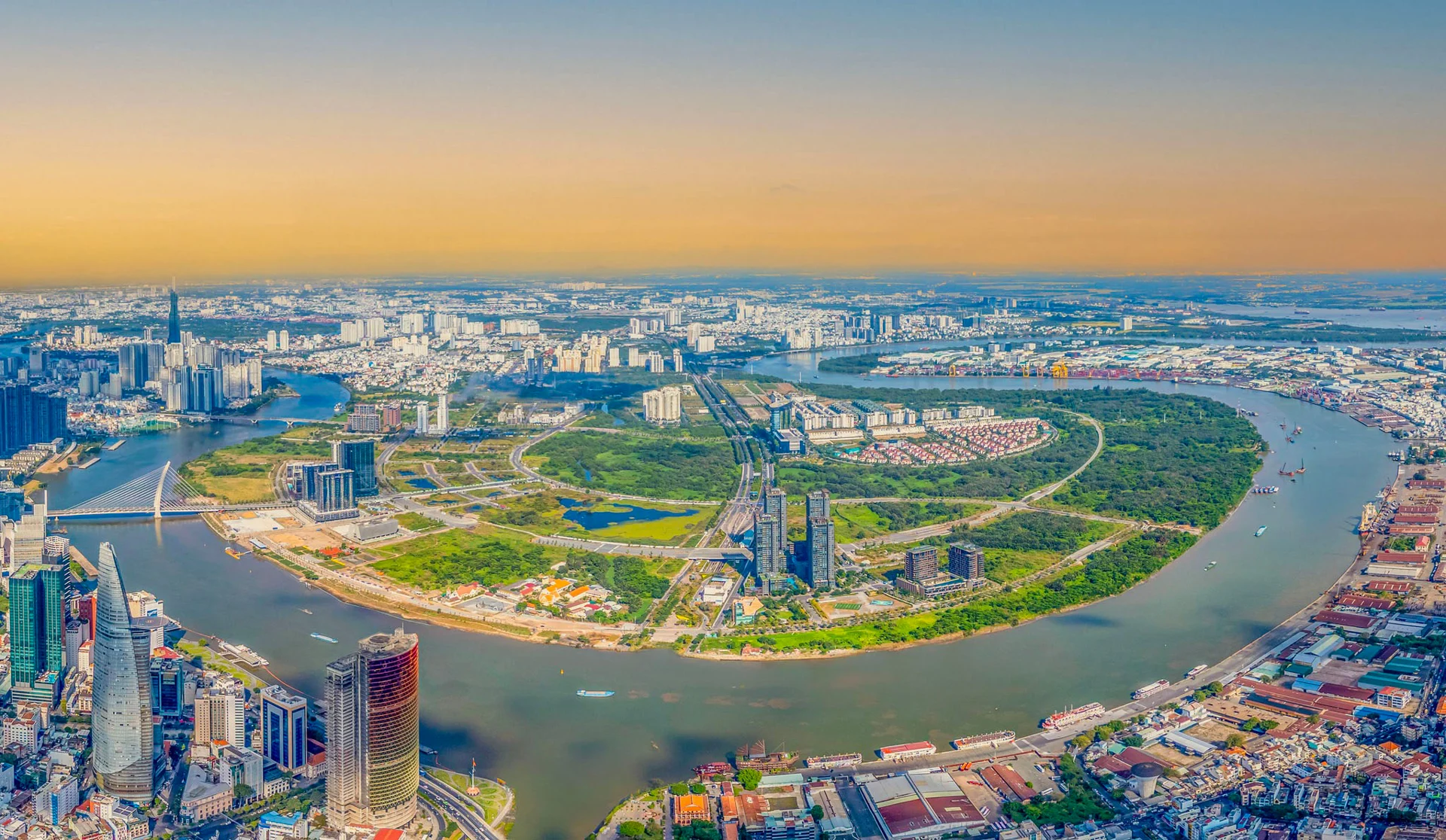
Located across the Saigon River from District 1, Thu Thiem is developing into one of HCMC's most significant new business districts.
The area combines modern developments, large-scale urban planning, improved infrastructure, and proximity to the traditional CBD.
The Thu Thiem eco-smart city development has attracted more than US$2 billion in investment, supporting the creation of a new urban environment designed around international business and lifestyle standards.
Grade A projects such as The Mett and The Hallmark have already established a presence in the area. Metro Line 1 also connects Thu Thiem with District 1, while multiple bridge links support road connectivity.
For companies planning several years ahead, Thu Thiem offers an opportunity to establish a presence in an emerging commercial hub while remaining close to the city's traditional centre.
Compared with the CBD, newer developments can also offer modern building specifications and a different cost structure.
Best suited for:
- Finance and banking companies planning a long-term presence in HCMC
- Businesses seeking modern Grade A office environments
- Companies that need proximity to District 1 without being located within the CBD
- Businesses planning for future growth and expansion
- Teams looking for newer commercial developments and modern workplace environments
District 3: Central Access Without the CBD Premium
District 3 sits immediately next to District 1 and provides many of the benefits of central HCMC while offering a broader range of office options.
In Q1 2025, office occupancy in District 3 was reported at approximately 85%–90%, supported by demand from consulting firms, technology companies, and foreign representative offices.
The district has more than 200 office buildings and established road connections to District 1, Binh Thanh, and Tan Son Nhat International Airport.
Office clusters along Nguyen Thi Minh Khai, Hai Ba Trung, and Vo Van Tan include Class B and C buildings that can provide professional office environments at more accessible rental levels than prime CBD buildings.
For businesses that want a central address but do not require a premium Grade A tower, District 3 can provide a practical middle ground.
Best suited for:
- Foreign representative offices
- Consulting and professional services firms
- Startups managing early-stage office costs
- Companies that require central accessibility
- Businesses looking for alternatives to premium District 1 rents
District 12: A Technology-Focused Office Ecosystem
For technology, software, and IT businesses, District 12 offers a different proposition from the city's central business districts.
The key driver is Quang Trung Software City (QTSC), an established technology ecosystem with hundreds of companies, specialised infrastructure, and access to a workforce focused on software development and technology.
Rather than competing primarily on CBD prestige, QTSC's value comes from ecosystem concentration.
Technology businesses can benefit from being close to other companies in the sector while accessing a talent pool that is already familiar with the area.
Rental costs can also be lower than in central HCMC, making the district relevant for businesses where office efficiency, talent access, and operational scale are more important than a CBD address.
Best suited for:
- Technology and software companies
- IT services and outsourcing businesses
- Engineering and product teams
- Tech startups
- Companies recruiting software developers and technical specialists
- Businesses that benefit from operating within an established technology ecosystem
Which HCMC Location Fits Your Business?
There is no single office location that works for every foreign company.
The right choice depends on what the business needs from its real estate: proximity to clients, access to talent, cost efficiency, corporate positioning, connectivity, or room to grow.
District 1: Finance, legal, professional services, enterprise headquarters
Thu Thiem: Finance, banking, modern corporate occupiers, long-term expansion
Thao Dien: International teams, expatriate hiring, lifestyle-oriented businesses
District 3: Representative offices, professional services, central operations
District 12 / QTSC: Technology, software, IT, engineering, outsourcing
For companies that are still testing the Vietnam market, flexibility can also be an important part of the location strategy.
Instead of immediately committing to a long-term conventional lease, flexible office solutions can provide a way to establish operations, understand the market, and assess future space requirements before making a larger real estate commitment.
What Foreign Companies Should Consider Before Choosing an Office Location
The district is only one part of the decision.
Before selecting a property, international companies should consider how the office will support their business over the next 12 to 36 months.
1. Who Will You Meet Most Often?
Think about where your clients, partners, banks, legal advisors, government contacts, and other stakeholders are located.
Companies with frequent meetings in the CBD may place a higher value on centrality, while businesses operating primarily through digital channels may have more flexibility.
For companies going through the early stages of establishing a presence in Vietnam, proximity to administrative offices and professional service providers can also be useful.
2. Who Are You Hiring?
Office location can influence recruitment and employee experience.
Access to public transport, food and beverage options, residential areas, and established business communities can all affect how attractive a workplace is to potential employees.
For technology businesses, proximity to established talent clusters may be particularly relevant.
The most appropriate location is therefore not necessarily the one closest to the company's clients. It may be the one that creates the right balance between clients, employees, and daily operations.
3. How Quickly Will the Business Grow?
A five-person representative office has very different requirements from a fifty-person team preparing to double in size.
Before signing a lease, consider:
- Current headcount
- Expected hiring over the next 12–24 months
- Team structure
- Meeting-room requirements
- Expansion requirements
- Lease flexibility
- Potential relocation costs
For businesses entering Vietnam for the first time, flexibility can reduce the risk of committing to more space than the operation actually needs.
4. What Is the Total Occupancy Cost?
Rent is only one component of office costs.
Companies should consider the full occupancy picture, including service charges, fit-out, furniture, utilities, parking, technology infrastructure, maintenance, and potential relocation or expansion costs.
Prime Grade A buildings in District 1 were reported at approximately US$55–70 per sqm per month, while locations outside the CBD can offer different pricing and building specifications.
The lowest headline rent does not necessarily translate into the lowest overall cost.
Beyond the Address: Choosing the Right Office Strategy
For a foreign company entering HCMC, choosing an office is not simply a property search.
It is part of a broader market-entry decision.
The right office should support the company's operational requirements today while remaining adaptable as the business develops.
Depending on the company's stage and objectives, this may mean:
- A conventional leased office for an established operation
- A flexible office while testing the market
- A serviced office for a small initial team
- A larger headquarters for regional operations
- A strategically located office to support recruitment
- A multi-location strategy for teams operating across HCMC
This is where an occupier-focused real estate approach becomes valuable.
Rather than starting with a building and working backwards, companies can start with their business requirements and identify the locations, buildings, and lease structures that best fit those needs.
How leapX Supports Foreign Companies Entering HCMC
Finding office space in Ho Chi Minh City can be straightforward. Finding the right office for a specific business is a different challenge.
leapX approaches commercial real estate from the occupier's perspective, helping companies assess office options based on their operational requirements, location strategy, budget, workforce, and growth plans.
For foreign companies entering or expanding in Vietnam, this can include evaluating:
- Suitable business districts and office locations
- Office buildings and available space
- Rental and occupancy considerations
- Workplace requirements
- Expansion and growth requirements
- Market-entry and relocation considerations
- Tenant representation and negotiation
- Longer-term portfolio strategy
The objective is not simply to find an available office.
It is to help businesses make a real estate decision that supports how they intend to operate and grow in Vietnam.
Finding the Right Office Location in Ho Chi Minh City
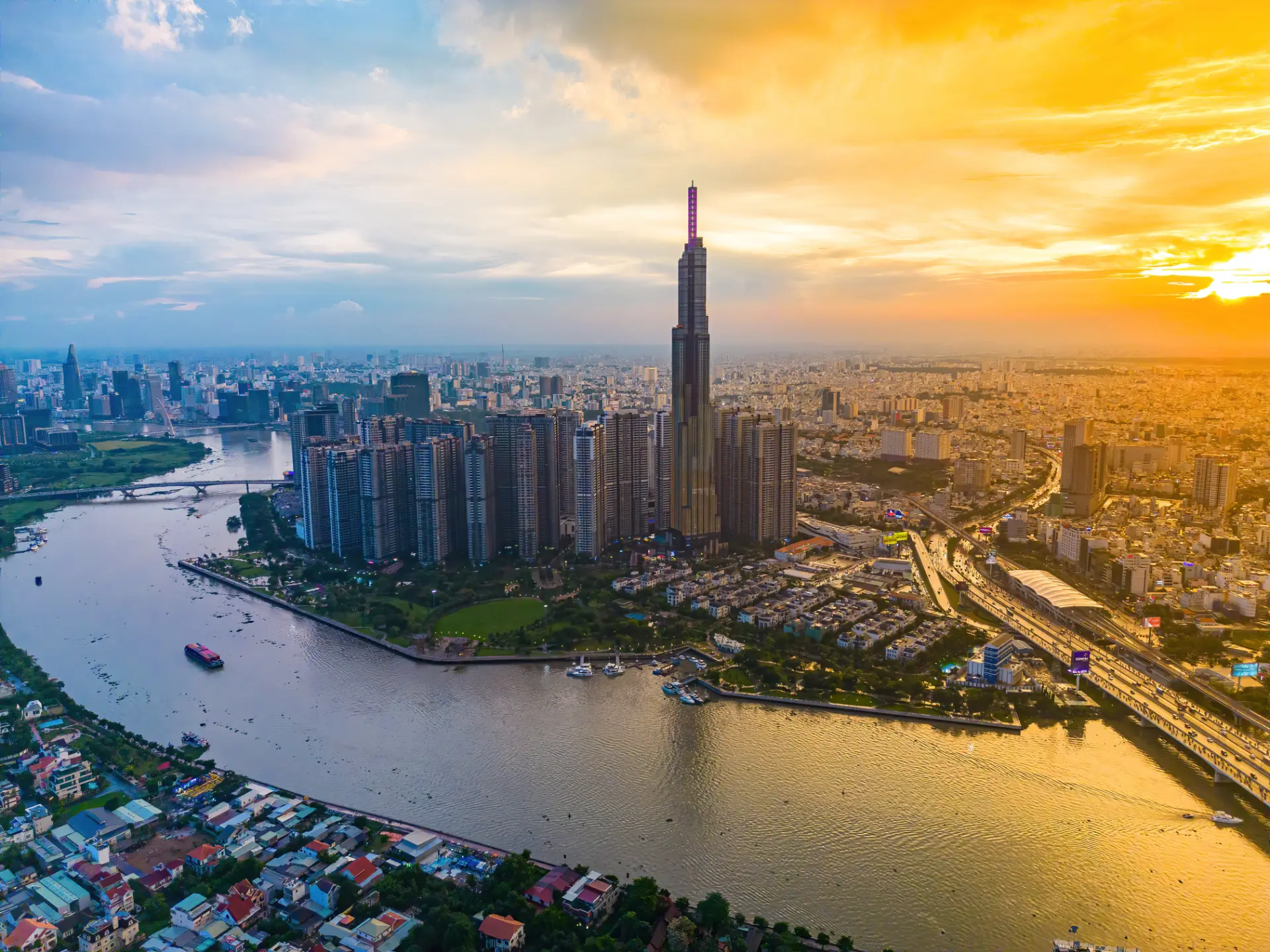
HCMC offers foreign companies more office-location options than ever before.
District 1 continues to serve businesses that value CBD proximity and corporate positioning. Thu Thiem is developing into a new-generation commercial hub. Thao Dien offers an internationally oriented environment, while District 3 provides central access with a broader range of cost options. For technology businesses, QTSC offers an established industry ecosystem outside the traditional CBD.
The right choice ultimately depends on the company's priorities.
Where will your clients be? Where will your employees come from? How quickly will you grow? And what does your business actually need from its office?
Answering those questions first makes the property search significantly more focused.
Looking for office space in Ho Chi Minh City?
Explore dedicated office space and flexible coworking space options for your team in Vietnam.